
Pet-Friendly Artificial Turf Guide for Michigan Dog Owners
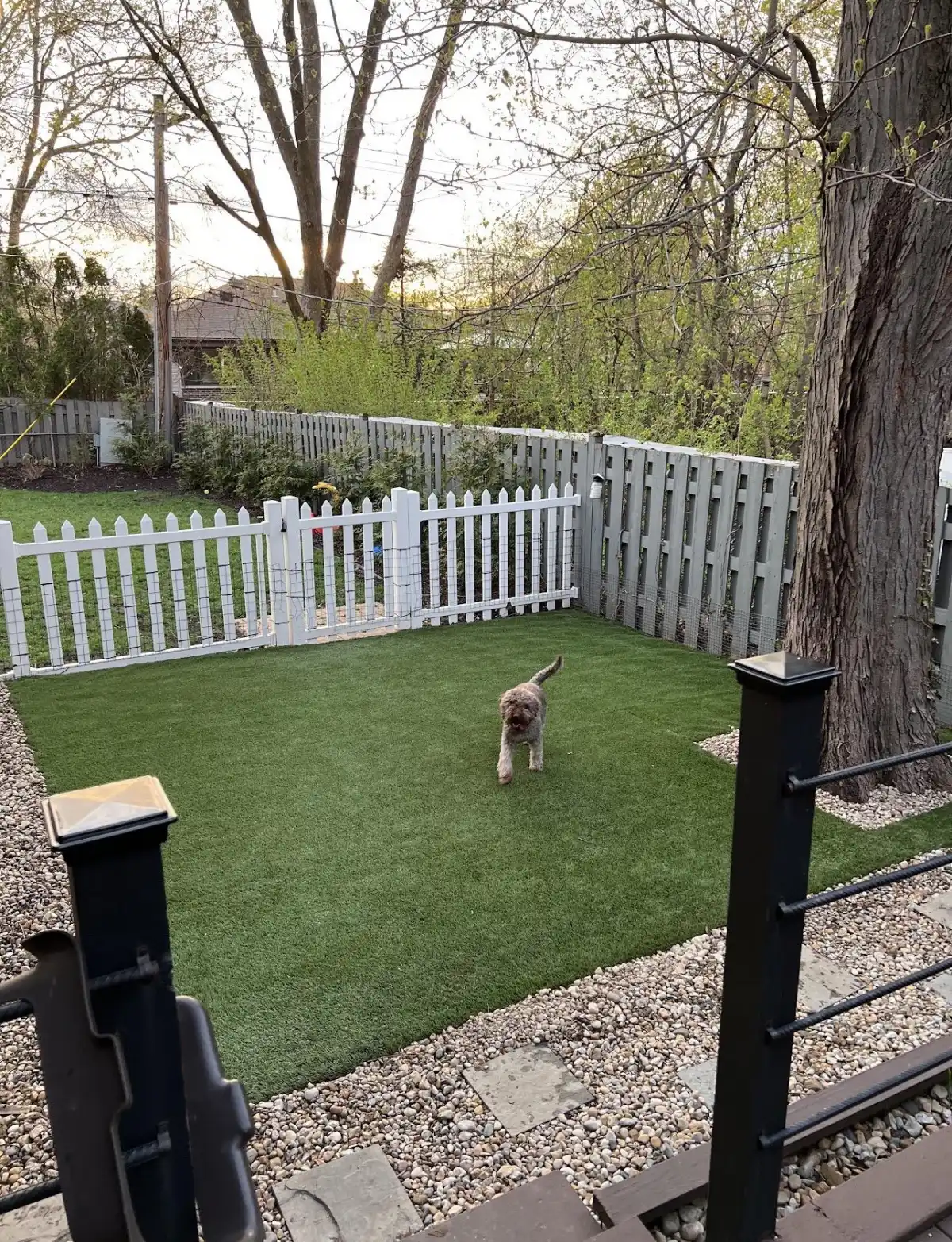
Pet-friendly artificial turf is safe for dogs, drains at over 30 inches per hour, and eliminates mud, dead patches, and pest habitats that plague Michigan lawns. If you are tired of wiping muddy paws, patching urine burns, or applying pesticides to a yard your dog immediately rolls in, pet turf may be the solution you have been looking for.
This guide covers everything Michigan dog owners need to know -- from safety and material choices to installation requirements and daily maintenance.
Is Artificial Turf Safe for Dogs?
Yes. Quality pet turf products are non-toxic, lead-free, and manufactured to meet ASTM safety standards. The polyethylene fibers used in modern turf are the same type of plastic used in food packaging and children's toys. Dogs can play on it, roll on it, chew on it, and use it as a bathroom without any health risk.
The infill material matters too. We use antimicrobial infill products that inhibit bacterial growth and resist odor. Unlike crumb rubber (recycled tire material sometimes used in sports fields), antimicrobial infill is specifically designed for pet applications and does not contain heavy metals or volatile organic compounds.
One safety advantage artificial turf has over natural grass: it eliminates the need for pesticides, herbicides, and chemical fertilizers. Dogs absorb lawn chemicals through their paw pads and by licking their fur after lying on treated grass. Removing those chemicals from your yard removes that exposure entirely.
Benefits for Michigan Dog Owners
No More Mud
Michigan's spring thaw turns every natural lawn into a mud pit. From March through May, dogs track mud through the house every time they go outside. Pet turf has no soil contact, so there is no mud -- even during the wettest weeks of the year. The permeable surface drains water straight through, and the drainage stone base channels it away from the surface.
No Dead Spots or Urine Burns
Dog urine kills natural grass by concentrating nitrogen in a small area. Every dog owner knows the pattern: brown circles scattered across an otherwise green lawn. Artificial turf is immune to urine damage. The liquid drains through the turf surface and into the stone base below, leaving no trace on the fibers.
No Pesticides or Chemical Treatments
Natural grass in Michigan requires regular herbicide and pesticide applications to control weeds, grubs, and other pests. These chemicals are toxic to dogs. The National Pesticide Information Center reports that dogs exposed to lawn chemicals have higher rates of certain cancers and organ damage. Artificial turf eliminates the need for any chemical lawn treatments.
Pest Reduction
Fleas and ticks live in natural grass, especially in shaded areas with moisture. Artificial turf over a proper stone base creates an environment that does not support these pests. The lack of organic matter, combined with good drainage, means there is no habitat for fleas, ticks, or the grubs that attract moles and skunks to dig up your yard.
Choosing the Right Pet Turf
Not all artificial turf products are suitable for heavy pet use. Here is what to look for when selecting pet-specific turf.
Fiber Type and Pile Height
Polyethylene fiber is the standard for pet turf -- it is soft, durable, and resists matting from heavy foot and paw traffic. A pile height of 1.25 to 1.75 inches works best for dogs. Taller pile traps waste more easily, while shorter pile may feel too rough on paw pads. The face weight (ounces of fiber per square yard) should be at least 50 oz for areas with heavy pet traffic.
Drainage Rate
This is the most important specification for pet turf. Standard residential turf drains at 20 to 30 inches per hour. Pet-specific turf should drain at 30 inches per hour or more. Some premium pet products feature perforated backing that allows drainage across the entire surface, not just through the stitch holes. Faster drainage means urine passes through quickly, which prevents odor buildup at the surface.
Infill Options
For pet areas, antimicrobial infill is strongly recommended over standard silica sand. Antimicrobial infill (brands like Envirofill, DuraSand, or ZeoFill) contains agents that inhibit bacterial growth and neutralize odors at the molecular level. This is the single most effective way to prevent urine smell in pet turf installations. The infill also weighs down the turf, supports the fiber blades, and provides cushioning underfoot.
Installation Considerations
Drainage Is Critical
For pet areas, drainage performance matters more than any other factor. Our standard installation includes a compacted drainage stone base that allows water (and liquid pet waste) to pass through and dissipate into the subsoil. For areas with high pet traffic -- multi-dog households, boarding facilities, doggy daycares -- we increase the stone base depth and may add a drainage aggregate layer for additional capacity.
Antimicrobial Infill Application
Antimicrobial infill is applied at a specific rate per square foot to maximize odor control. Too little infill and the antimicrobial effect is diminished. Too much and it restricts drainage flow. We calibrate the infill depth based on the turf product's specifications and the expected pet traffic volume.
Base Preparation for Michigan Soil
Michigan's clay-heavy soils, especially common in the central and southern parts of the state, drain poorly on their own. For pet turf on clay soil, we excavate deeper and add an additional layer of crushed stone to compensate for the slow percolation rate of the underlying soil. Sandy soils found in the lakeshore and northern Michigan areas drain naturally and typically need only the standard base depth.
Perimeter Containment
Dogs test boundaries. Our framed edge system uses solid perimeter boards that dogs cannot push, dig under, or dislodge. This is a significant upgrade over the flexible plastic landscape edging that some installers use, which persistent diggers can defeat within weeks.
Maintenance and Cleaning
Pet turf requires minimal maintenance, but it does require some. Here is a practical schedule based on our experience with hundreds of pet turf installations across Michigan.
Daily (Takes 2 Minutes)
Pick up solid waste the same way you would on natural grass. The turf surface makes this easier because waste sits on top of the fibers instead of sinking into soil.
Weekly (Takes 10 Minutes)
Rinse the turf surface with a garden hose, focusing on areas where your dog urinates most frequently. This flushes any residual urine through the drainage system and reactivates the antimicrobial infill. For multi-dog households, rinsing twice per week is recommended during warm months.
Monthly (Takes 20 Minutes)
Apply a turf deodorizer or enzyme cleaner to the entire surface. These products break down organic residue at the molecular level and supplement the antimicrobial infill's odor control. Brush the turf fibers with a stiff-bristle broom (not a metal rake) to keep the pile upright and distribute the infill evenly. Check the edges for any separation and the surface for any low spots where water might pool.
Common Concerns Addressed
Heat
Artificial turf does get warmer than natural grass in direct sunlight during summer. For pet areas, this is manageable. Most dogs prefer shaded areas in hot weather regardless of the surface type. If your pet area is in full sun, a quick spray with the garden hose drops the surface temperature by 20 to 30 degrees instantly. Modern pet turf products with heat-reducing technology also run 15 to 20% cooler than standard turf.
Urine Odor
Odor is the number one concern dog owners raise about pet turf. With proper installation -- meaning a drainage stone base, permeable turf backing, and antimicrobial infill -- odor is not a problem. The urine passes through the turf, passes through the infill (which neutralizes odor compounds), and drains into the stone base where it dissipates. Problems occur when pet turf is installed without adequate drainage or without antimicrobial infill. Those are installation shortcuts, not a limitation of the product.
Digging
Dogs dig for different reasons -- boredom, prey drive, trying to cool down, or instinct. Artificial turf does not provide the same digging satisfaction as soil, which means most dogs stop trying after a short adjustment period. The solid perimeter board system prevents dogs from accessing the edge of the turf, which is where most digging attempts start. For persistent diggers, we can install additional anchoring points to keep the turf surface flush against the base.
Cost of Pet Turf in Michigan
Pet turf installations in Michigan typically cost $13 to $15 per square foot, including the antimicrobial infill upgrade and enhanced drainage base. A standard backyard dog run (200 to 500 square feet) runs $2,600 to $7,500. Full backyard pet turf installations (500 to 1,500 square feet) range from $6,500 to $22,500.
Compare that to the ongoing costs of maintaining natural grass with dogs: reseeding dead patches ($100 to $300/year), extra watering to keep damaged areas alive ($50 to $150/year), flea and tick treatments for the yard ($100 to $200/year), and the constant mud cleanup that damages flooring and furniture inside your home. Pet turf eliminates all of these costs and saves you hours of maintenance every week.
For a detailed cost breakdown, read our complete guide to artificial turf costs in Michigan.
Ready to Give Your Dog a Better Yard?
Get a free estimate for pet-friendly artificial turf installation from Great Lakes Synthetic Turf. We will visit your property, assess the drainage conditions, and recommend the right turf product and infill for your dogs and your budget.