
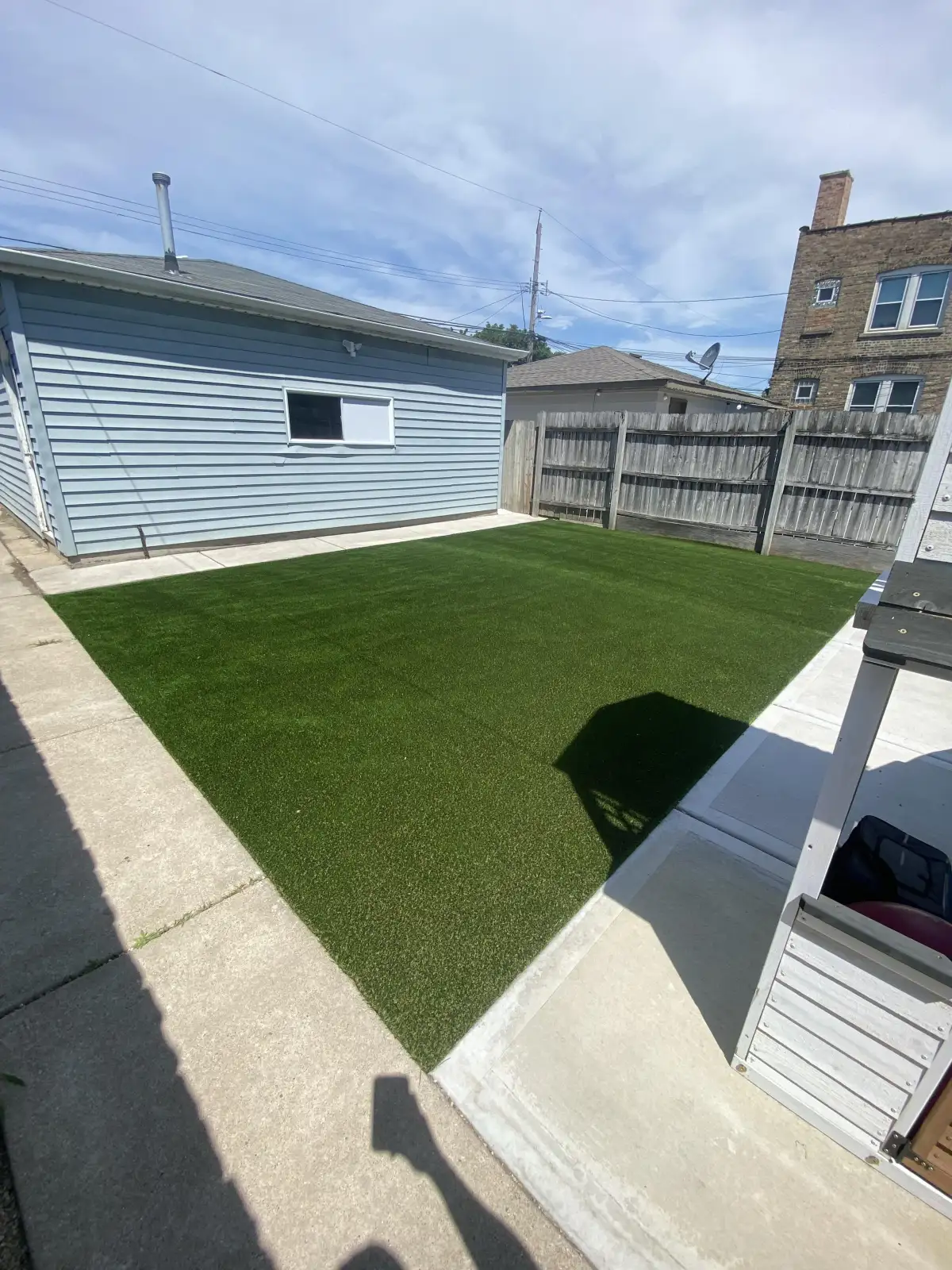
Pet turf works best as a complete washable system, not simply a tougher version of lawn turf. The surface, drainage base, edge restraint, infill, rinse access, and cleaning routine all affect how a dog area performs after rain, snowmelt, and concentrated daily traffic.
For Benton Harbor homes, pet turf is especially useful in fenced runs, narrow side yards, and shaded routes where natural grass becomes muddy or bare. Those spaces often collect roof runoff or sit between hardscape and fences, so water movement and cleaning access need to be designed before installation.
Great Lakes Synthetic Turf installs pet turf systems with compacted drainage stone, secure framed edges, permeable turf, and infill selected for dog use. The layout can also coordinate with gates, patios, kennels, planting beds, and larger outdoor living areas.
Daily-use priority: Give rinse water a clear path, keep a hose within reach, and avoid boxed-in edges where debris or moisture can collect. Easy maintenance starts with the layout.
Move rain and rinse water through the whole system
Perforations let liquid pass through the turf backing, but the aggregate base and finished grade must carry it away. Downspouts, patio runoff, compacted paths, and low fence lines can overwhelm a small dog run if they are not addressed. The installation plan should show where water goes after it reaches the base.
If water already stands after a storm, the estimate should address that condition before turf is installed. A drainage-first plan may include more base stone, a better discharge route, grading adjustments, or coordination with drainage contractor work. Turf can solve mud and bare grass, but it should not be used to cover a water problem that needs to be corrected.
Use a stable base and secure every vulnerable edge
Organic soil is removed and replaced with compacted aggregate so the dog area remains firm and drainable. Framed, fastened edges help prevent lifting at gates, fence lines, and favorite pacing routes. Clean transitions also keep loose soil and mulch from washing onto the turf.
A complete proposal should list the full system: excavation, haul-off, grading, stone base, compaction, edge containment, seam materials, turf product, infill, final brushing, and cleanup. If two quotes are far apart, compare those line items before assuming one installer is simply less expensive.
Select the turf and infill for dog use
Pet areas need a permeable backing, comfortable pile, strong recovery, and an infill plan suited to the number and size of dogs. Product choice should also consider shade, sun exposure, traffic concentration, and whether the area doubles as a family lawn.
Tell the installer where dogs tend to run, rest, and relieve themselves. That behavior can influence seam placement, drainage emphasis, edge details, and hose access. A mixed-use yard may combine pet turf with a patio, hardscape path, or separate play surface.
Artificial Turf Installation
See the statewide process, base preparation details, and service options.
Kalamazoo Turf Planning
Explore turf installation considerations for Kalamazoo properties.
Michigan Service Areas
Find your community and confirm service availability.
Build a cleaning routine around the dogs and the space
Remove solid waste promptly, rinse the regular relief area, and clear leaves before they break down into the pile. A turf-safe pet cleaner can be used when needed. Households with several large dogs will naturally clean more often than a home with one small dog and a larger turf area.
Ask what is included before comparing totals. A quote that leaves out drainage stone, framed edges, infill, disposal, difficult access, or drainage corrections may not be comparable to a complete installation proposal. If the project has narrow gates, stairs, steep access, mature landscaping, roots, patios, or low spots, those details should be discussed before the schedule is set.
Share the dog count, routines, and problem areas
For an estimate, note the number and size of dogs, fenced boundaries, preferred relief area, hose location, downspouts, standing water, gate width, and any worn path along the fence. Those details are more useful than square footage alone when planning drainage and edge protection.
- Count the dogs and note their size and daily yard routine.
- Identify the regular relief area and any fence-line pacing.
- Confirm where rain, snowmelt, and rinse water will discharge.
- Keep hose access convenient for quick, targeted rinsing.
- Secure gates, beds, patios, and fence edges against lifting or washout.
- Plan leaf removal and brushing for shaded or tree-covered yards.
Protect high-traffic gates and narrow routes
Dogs accelerate and turn at gates, doorways, and corners. These spots benefit from stable base compaction, secure perimeter fastening, and enough width to avoid creating a single worn track. A short hardscape landing at the door can also reduce debris transfer into the house.
Keep the yard comfortable through the seasons
Shade can leave natural grass muddy, while full summer sun can warm any outdoor surface. Pet turf planning should account for both. Provide shade and drinking water during hot weather, rinse the surface when helpful, clear autumn leaves, and allow snowmelt to drain before spring cleanup.
Great Lakes Synthetic Turf serves Benton Harbor and communities across Michigan with artificial turf installation, synthetic turf installation, artificial grass installation, pet turf, putting greens, drainage work, hardscaping, landscape lighting, outdoor living, and landscaping. Request a free estimate through the contact page or call (231) 414-6011.
FAQ
What makes artificial turf suitable for dogs?
A permeable surface, compacted drainage base, secure perimeter, pet-appropriate infill, and an easy cleaning layout create a practical dog yard.
Why does drainage matter in a pet turf area?
Drainage carries rain, snowmelt, and rinse water through and away from the dog area. The turf backing, base, grade, and discharge path must work together.
How should homeowners clean pet turf?
Remove solid waste, rinse regular relief spots, clear leaves and debris, and use a turf-safe pet cleaner as needed.
Does pet turf eliminate every odor?
Pet turf simplifies cleaning, but it still requires prompt waste removal and periodic rinsing. Drainage and suitable infill help that routine work effectively.
Can dogs dig at the edge of artificial turf?
Securely framed and fastened edges are harder to lift. Gates, fence lines, and planting beds deserve particular attention.
Can pet turf work in a shaded side yard?
Yes, provided runoff, drainage, edge containment, access, and rinse water are planned for the narrow space.