
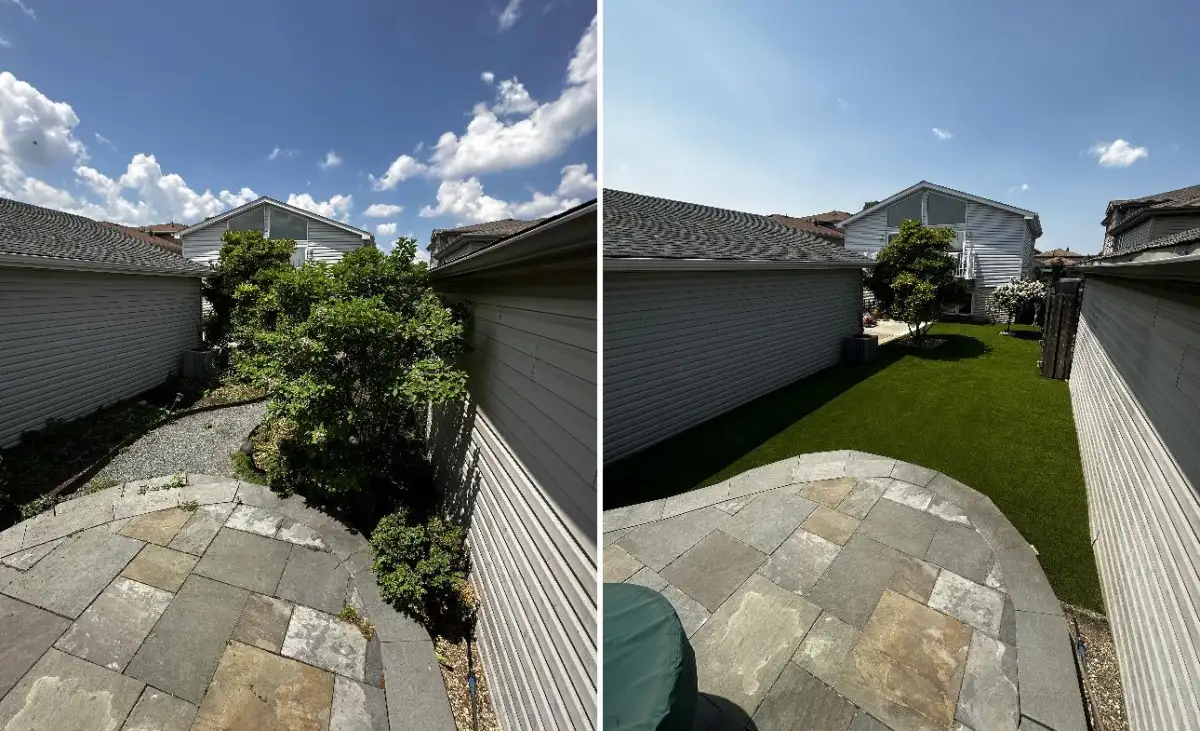
The best question before booking artificial turf installation in Benton Harbor is not simply, “Which turf looks most natural?” It is, “Does the complete installation plan fit this yard?” The visible turf is only one part of the finished system. Existing grade, water movement, removal, aggregate base, edge restraint, seams, infill, access, and intended use all affect the recommendation.
A shaded side yard, family lawn, dog run, pool surround, and backyard putting green should not receive identical answers. Use the questions below to compare proposals on the work that matters, not only a product sample or square-foot total.
Before you approve an estimate: make sure it identifies what problem the turf is meant to solve, what will be built beneath it, where water will go, which materials are included, and what care the surface will need.
1. What should the installer learn about my yard before recommending turf?
A useful site review should cover the measured footprint, current surface, slope, soft or low spots, downspouts, irrigation, nearby planting, shade, adjoining patios and walks, pets, traffic patterns, and the way the finished area will be used. It should also account for gate width, steps, fencing, and the route materials and removed soil will take through the property.
Share what is not obvious during a dry visit: where puddles form, which route the dog uses, whether a downspout discharges nearby, or where natural grass repeatedly thins. Photos can begin the conversation, but field measurements and property conditions are what turn a general idea into a specific scope. Great Lakes Synthetic Turf provides artificial turf installation and related site work throughout Michigan, including the Benton Harbor service area.
2. Is artificial turf the right response to the problem I want to solve?
Artificial turf can be a practical alternative where homeowners want to eliminate mowing, reduce routine lawn watering, avoid muddy traffic areas, or create a consistent-use surface. It is not automatically the right answer for every part of every property. The result still needs to work with drainage, shade, heat exposure, trees, planting beds, traffic, pets, and the surrounding landscape.
Ask the installer to connect the recommendation to your priority. A family play area may emphasize comfort and durable traffic performance. Pet turf raises questions about drainage, rinse access, cleaning, infill, and secure edges. A putting green requires a purpose-built playing surface, contours, cups, fringe, and ball-roll decisions. If the area already collects water, the first conversation may need to include a drainage assessment rather than assuming turf alone will correct it.
3. What will be removed, and what will replace it below the surface?
Ask for a plain-language description of removal, excavation, grading, aggregate base preparation, compaction, edge restraint, turf placement, seams, infill, transitions, and cleanup. The exact depth and materials should follow the site and intended use; a vague promise to “prep the ground” does not tell you enough to compare proposals.
Great Lakes Synthetic Turf describes its turf work as a system built around drainage stone base preparation and framed edge containment. Your proposal should still explain how that approach applies to your specific yard, including transitions at concrete, pavers, planting beds, fences, steps, or other fixed features. Ask whether existing irrigation components, downspouts, utilities you know about, or landscape elements require separate attention.
Artificial Turf Installation
See how site evaluation, base preparation, drainage, framed edges, turf selection, and finishing work together.
Benton Harbor Service
Review turf, pet area, putting green, drainage, hardscape, and outdoor living options for local properties.
Turf Drainage Guide
Understand how surface permeability, grade, aggregate base, and an outlet path affect water movement.
4. Where will rain and snowmelt go after installation?
Many turf products allow water to pass through the backing, but surface permeability is only the first step. Water still needs to move through the base and away from the finished area. Existing grade, compacted subgrade, low spots, downspouts, surrounding hardscape, and the available outlet all matter.
Ask the installer to point out the expected water path. If the yard already has standing water or runoff concerns, confirm whether the proposal includes only the turf base or also includes broader drainage work. The Michigan artificial turf drainage guide explains why the backing, base, grade, and outlet have to function as one system.
5. How do I compare turf products for the way the area will be used?
Do not choose on color alone. Ask why the recommended product fits the intended use and discuss pile height, density, surface feel, backing and drainage characteristics, infill, viewing direction, seam locations, and appearance from the home. Review a sample in the light and orientation that matter to the finished yard when possible.
Product questions should change with the application. Dog owners should ask how liquids move through the system and how the area will be cleaned. Homeowners considering a practice area should review the dedicated putting green installation process rather than using lawn turf as a substitute. For a narrow side yard, seam placement, edge security, foot traffic, and access may be more important than they are in a broad open lawn.
6. Why is square footage not enough to predict the installed cost?
A 400-square-foot rectangle with open equipment access is not the same project as 400 square feet divided by curves, steps, trees, beds, and narrow gates. Removal, disposal, excavation, grade correction, drainage needs, aggregate base, turf selection, infill, edge restraint, seams, transitions, and access labor can all affect the total.
When two quotes differ, compare what each one includes before assuming one installer is charging more for the same work. Look for named materials, measured area, preparation steps, exclusions, cleanup, and a process for approving changes if concealed conditions alter the scope. A site-specific written estimate is more useful than multiplying a broad online price by the lawn area.
7. What maintenance will the finished turf require?
Artificial turf eliminates mowing and routine lawn watering, but it is not maintenance-free. Leaves and debris still need removal. High-traffic fibers may need brushing. Pet areas need a cleaning routine. Edges, seams, and infill should be checked over time, and snow removal or other seasonal care should follow the product guidance.
Ask for care instructions tied to your property and selected system. Tree cover, pets, shade, direct sun, daily traffic, and nearby planting change the work. Our Michigan artificial turf maintenance guide covers routine and seasonal care in more detail.
8. Which warranty details should be in writing?
Ask about product coverage and workmanship coverage separately. Confirm who provides each warranty, how long it lasts, what is covered, what is excluded, whether maintenance is required, whether coverage transfers, and how a claim begins. A general statement that the turf is “under warranty” is not a substitute for the actual terms.
The same rule applies to scheduling and payment details: review the written proposal. It should identify the work, materials, responsibilities, exclusions, payment timing, and how requested changes will be approved. Do not rely on a verbal assumption for an item that matters to your decision.
Use this booking checklist to compare proposals
- The measured footprint and intended use are clearly identified.
- Removal, disposal, grade work, aggregate base, compaction, and cleanup are described.
- The plan explains where water will move during rain and snowmelt.
- The turf, infill, edges, seams, transitions, and viewing direction are named.
- Gate access, steps, fences, planting, irrigation, and nearby hardscape have been considered.
- Product and workmanship warranty terms are available for review.
- The maintenance routine fits the property's pets, trees, shade, and traffic.
- Exclusions, payment timing, and the process for scope changes are in writing.
Clear answers make it easier to compare the full installation rather than two samples or two totals. They can also reveal when drainage, pet use, a specialty surface, or surrounding hardscape deserves separate attention before you book.
Discuss your Benton Harbor artificial turf project
Tell Great Lakes Synthetic Turf how the area is used, its approximate size, known wet spots, access limits, pets, and nearby patios or planting when you request an estimate through the contact page. The next step is to connect those priorities to the site conditions and a written scope.
Frequently Asked Questions
What should an artificial turf installer inspect before quoting my Benton Harbor yard?
The review should cover the intended use, measurements, existing surface, slope and low spots, water sources and drainage routes, access, shade, pets, adjoining hardscape, and known buried features. Those conditions help define removal, base preparation, product selection, edges, seams, and cleanup.
Does artificial turf fix a yard that already holds water?
Not by itself. A permeable turf surface can let water pass through, but the grade, subgrade, aggregate base, downspouts, low areas, and outlet path still determine where that water goes. Existing standing-water or runoff problems should be evaluated separately from the turf surface.
Why can two artificial turf quotes for the same square footage be different?
The quotes may include different amounts of removal, excavation, grade correction, drainage work, aggregate base, edge restraint, turf, infill, seaming, transitions, access labor, disposal, or cleanup. Compare the written materials and scope line by line instead of comparing totals alone.
What maintenance should I expect after artificial turf installation?
Typical care includes removing leaves and debris, rinsing as needed, brushing high-traffic fibers, cleaning pet areas, and periodically checking edges, seams, and infill. The specific routine should match the selected product, tree cover, pets, traffic, and how the area is used.
What warranty questions should I ask before booking?
Ask for the product and workmanship terms separately, who provides each warranty, what is covered or excluded, the length of coverage, required maintenance, and how a claim is started. Review the written terms rather than relying on a general promise.